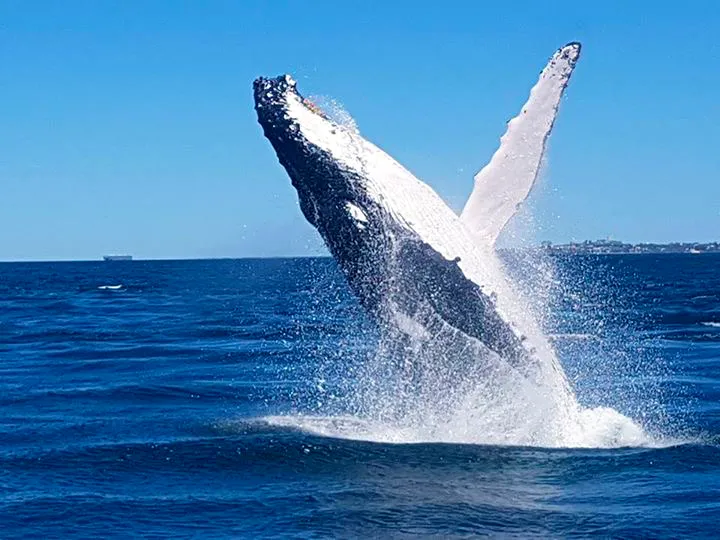
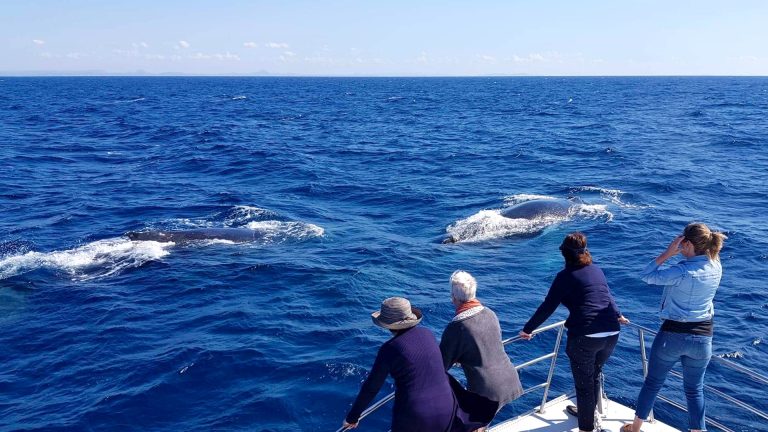
Every year from July to the end of October, thousands of humpback whales migrate along the Queensland coastline, passing directly by the Sunshine Coast on their annual journey north and south.
This incredible migration has made Sunshine Coast whale watching one of the region’s most popular winter ocean experiences, attracting visitors looking to witness breaching whales, playful calves and spectacular marine encounters aboard vessels like Crusader 1.
One of the most common questions we receive at Sunshine Coast Afloat is:
“What is the best weather for whale watching on the Sunshine Coast?”
The answer may surprise you.
Does Weather Affect Whale Watching?
The simple answer is — weather affects people more than it affects whales.
Humpback whales continue migrating, socialising, resting and surfacing regardless of whether the sky is sunny, cloudy or lightly raining.
Unlike humans, whales are completely adapted to changing ocean conditions and are active throughout the day in all types of weather.
For guests aboard whale watching tours, however, weather conditions can influence:
- Comfort onboard
- Ocean movement
- Visibility
- Ease of moving around the vessel
- Photography conditions
- Overall cruising experience
What Is the Best Weather for Whale Watching on the Sunshine Coast?
Many people assume bright sunny skies and perfectly calm water create the best whale watching conditions.
While calm “glassy” ocean conditions are certainly beautiful for cruising and photography, they are not always the conditions where whales are most active on the surface.
In fact, we often notice increased surface activity during slightly overcast or mixed weather conditions.
Guests regularly witness:
- Breaching humpback whales
- Tail slapping
- Pectoral fin waving
- Spy hopping
- Competition pods
- Mothers travelling with calves
throughout a wide variety of weather conditions.
Whale Behaviour During Migration Season
As humpback whales migrate north earlier in the season, they are often seen travelling alone or in smaller groups.
During the southern migration later in the season, whale behaviour changes significantly.
This is when we commonly encounter:
- Mothers travelling with newborn calves
- Male escort whales
- Competition pods
- Highly active social interactions
Competition pods are groups of male humpback whales competing for the attention of a female, often creating some of the most exciting whale watching encounters of the season.
Is Whale Watching Good in Cloudy or Rainy Weather?
Absolutely.
Cloudy weather and light rain can still provide excellent whale watching opportunities on the Sunshine Coast.
The whales themselves are unaffected by rain and continue their migration normally.
It is worth remembering that humpback whales spend much of their time feeding in the freezing waters of Antarctica before migrating north into the warmer waters of Queensland.
Compared to Antarctic conditions, even cool Sunshine Coast winter weather is relatively mild for humpback whales.
For guests, we simply recommend bringing:
- A light waterproof jacket
- Warm layers
- A poncho during rainy conditions
- Non-slip footwear
- Sunglasses and sunscreen when conditions clear
Some of the most memorable whale watching experiences happen on cooler, overcast days.
When Are Whale Watching Tours Cancelled?
At Sunshine Coast Afloat, guest safety and comfort always come first.
Whale watching tours are not cancelled simply because rain is forecast.
Our cruises operate based on suitable marine conditions rather than land-based weather forecasts.
The key factors influencing whether a whale watching tour can safely operate include:
- Wind strength
- Wind direction
- Swell height
- Swell direction
- Visibility conditions
- Thunderstorm activity
Marine weather forecasts can differ significantly from conditions experienced on land, which is why ocean conditions are monitored carefully before every departure.
Whale Watching During Thunderstorms
If severe weather or thunderstorms are forecast, whale watching tours may be cancelled or rescheduled for safety reasons.
Thunderstorms create additional risks on the water, including:
- Lightning
- Sudden wind changes
- Reduced visibility
- Rough ocean conditions
When this occurs, guests are offered the opportunity to reschedule their whale watching experience wherever possible.
Tips for Booking Whale Watching on the Sunshine Coast
One of the best tips for visitors planning a whale watching tour is to book early in their holiday or stay on the Sunshine Coast.
This allows flexibility to reschedule your tour if weather conditions become unsuitable later in the week.
Whale watching season on the Sunshine Coast runs from July through October, with peak whale activity commonly occurring throughout August and September.
Experience Sunshine Coast Whale Watching Aboard Crusader 1.
Every whale watching tour aboard Crusader 1 offers a unique experience on the water.
From breaching humpback whales and newborn calves to playful competition pods and close encounters offshore, no two whale watching cruises are ever the same.
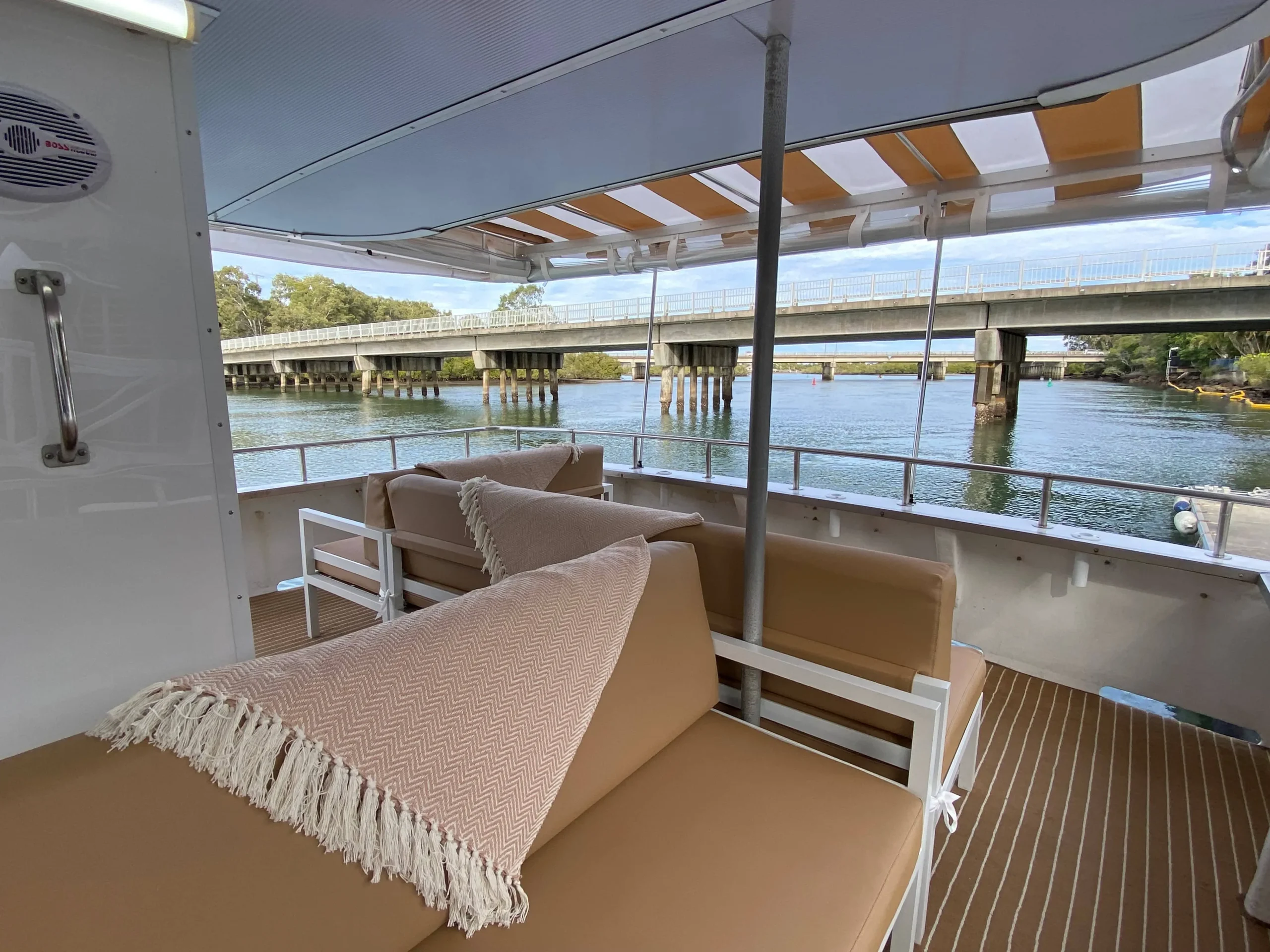
At Sunshine Coast Afloat, we specialise in relaxed small-group whale watching tours designed to maximise comfort, visibility and unforgettable marine experiences.
To learn more about Sunshine Coast whale watching tours, private charters and online bookings, visit Sunshine Coast Afloat.